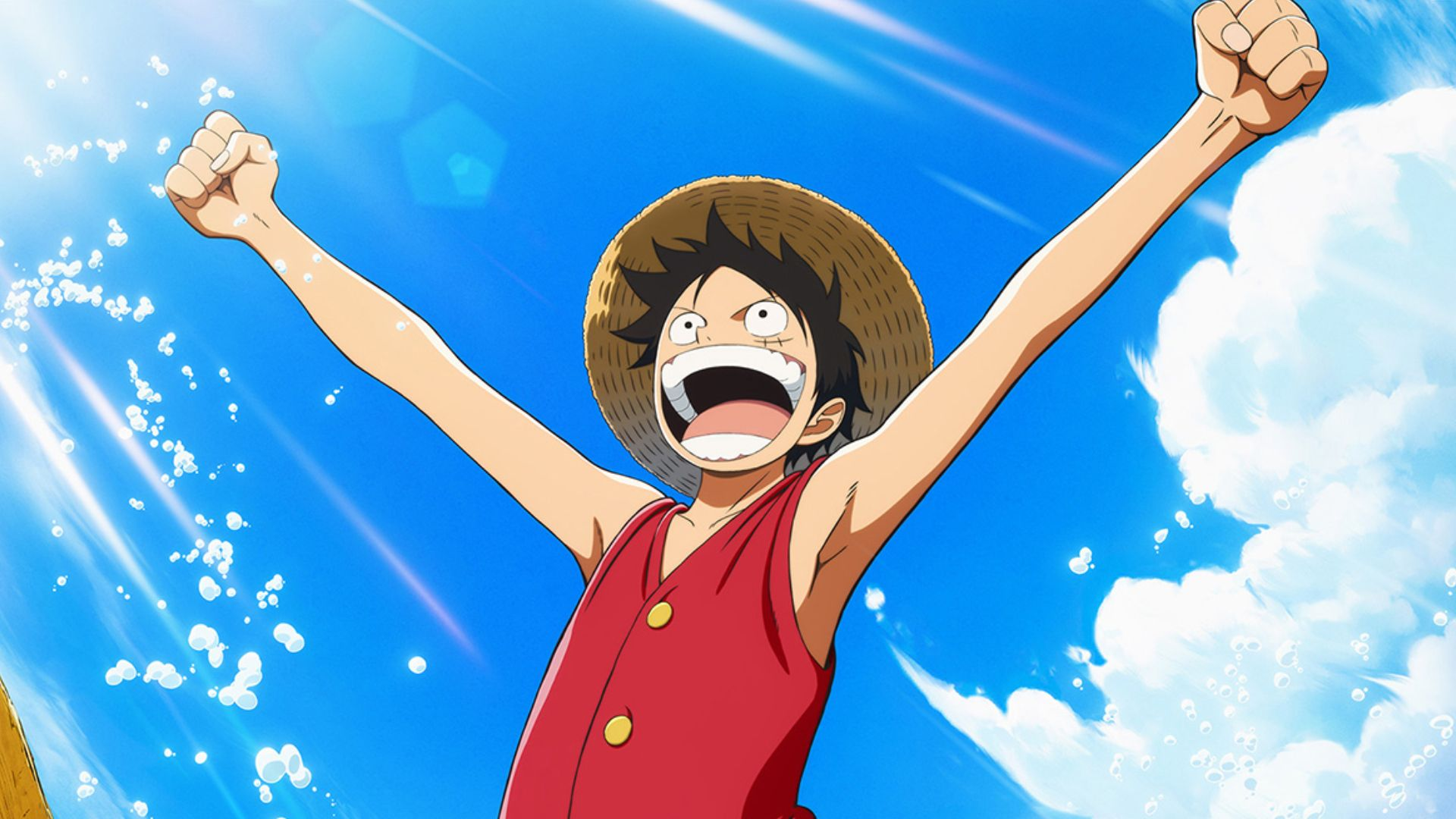


One of the greatest leaders I’ve ever seen is Monkey D. Luffy.
Monkey D. Luffy, or Luffy, is the central character of the long-running manga and anime “One Piece”. He’s a kid with a single and seemingly impossible dream: to become King of the Pirates. The show chronicles his pursuit of that dream and the people he meets along the way. I’ll leave the summary there so I don’t drop any spoilers.
Many know “One Piece” in its live-action form on Netflix, and the anime and manga have a large and dedicated fan base. I’ve been watching the show on-and-off since the pandemic when I needed a way out of my mind-bending isolation. “One Piece” offered a fantastical, funny, and touching world – one I could sink my imagination’s teeth into easily right before bed.
Eventually, after about 100 episodes (the show has well over 1,000), I started to see beyond the animation style (which took some getting used to) and look past the slow-moving plot lines and silliness of the Gum-Gum of it all. I can now say confidently that "One Piece" is one of the most epic and riveting tales I have ever encountered. I watched Christopher Nolan’s “The Odyssey” twice (I absolutely loved it), and afterwards I came home to watch my fix of “One Piece”. The parallels were hard to ignore. The sweeping epic that is Luffy’s quest to achieve his dream of becoming King of the Pirates had me feeling just as broad an array of emotions as Nolan’s Odyssey.
One might argue, “Well, Emi, that’s what happens when you have a shallow understanding of the depth and breadth of a classic like The Odyssey.” But I would argue, the failure to see the parallel depth and breadth in “One Piece” is equally problematic. There is something essential and deeply valuable about witnessing someone as they chase a dream – whether it’s the dream to get home or the dream to become the King of the Pirates. Underneath both dreams is an even more important realization: the essential human desire to be free. Besides, “One Piece” has far more sociopolitical depth and real-world relevance than I anticipated when I started watching.
Luffy’s self-belief, his belief in his friends, his intuition, and his capacity for learning are almost irrationally boundless. Those qualities, however, are what every great leader needs.
I’m in the process of building a company, and there are a slew of things I am responsible for doing that I have never done before. Just like Luffy learning how to take his special abilities to greater and greater heights, I have to constantly try, fail, and try again until I get it right. Every time I fail and learn, I get stronger. That takes a capacity for believing in myself and, just as importantly, in my crew (um, team) that rests at the heart of every episode of “One Piece”.
When I’m watching the show (and I binge it heavily), I find myself taking notes and capturing quotes. Yes, I take notes while watching an anime. In fact, I am writing this as I watch episode 1,051.
I wouldn’t be fair to the show if I didn’t mention there are aspects of Luffy’s leadership that run counter to what a great leader should possess, but these counter examples serve as useful cautionary tales. Occasionally, Luffy will bring his team impulsively into a challenge that puts their lives at risk or the lives of others. His lack of self-awareness in the show is a great plot device, but it’s also a great example of a leadership quality I wouldn’t bring to my team. His capacity for risk-taking, however, is something I am actively working on cultivating for myself.
The biggest lesson from “One Piece”, at least for me, is that leadership lessons don’t have to come from an expensive course or heady books. Sometimes, all we have to do is look at an animated kid relentlessly pursue his dream of becoming King of the Pirates.
So, if you want to lead, ask yourself: What’s your dream, and what are you willing to do to achieve it?